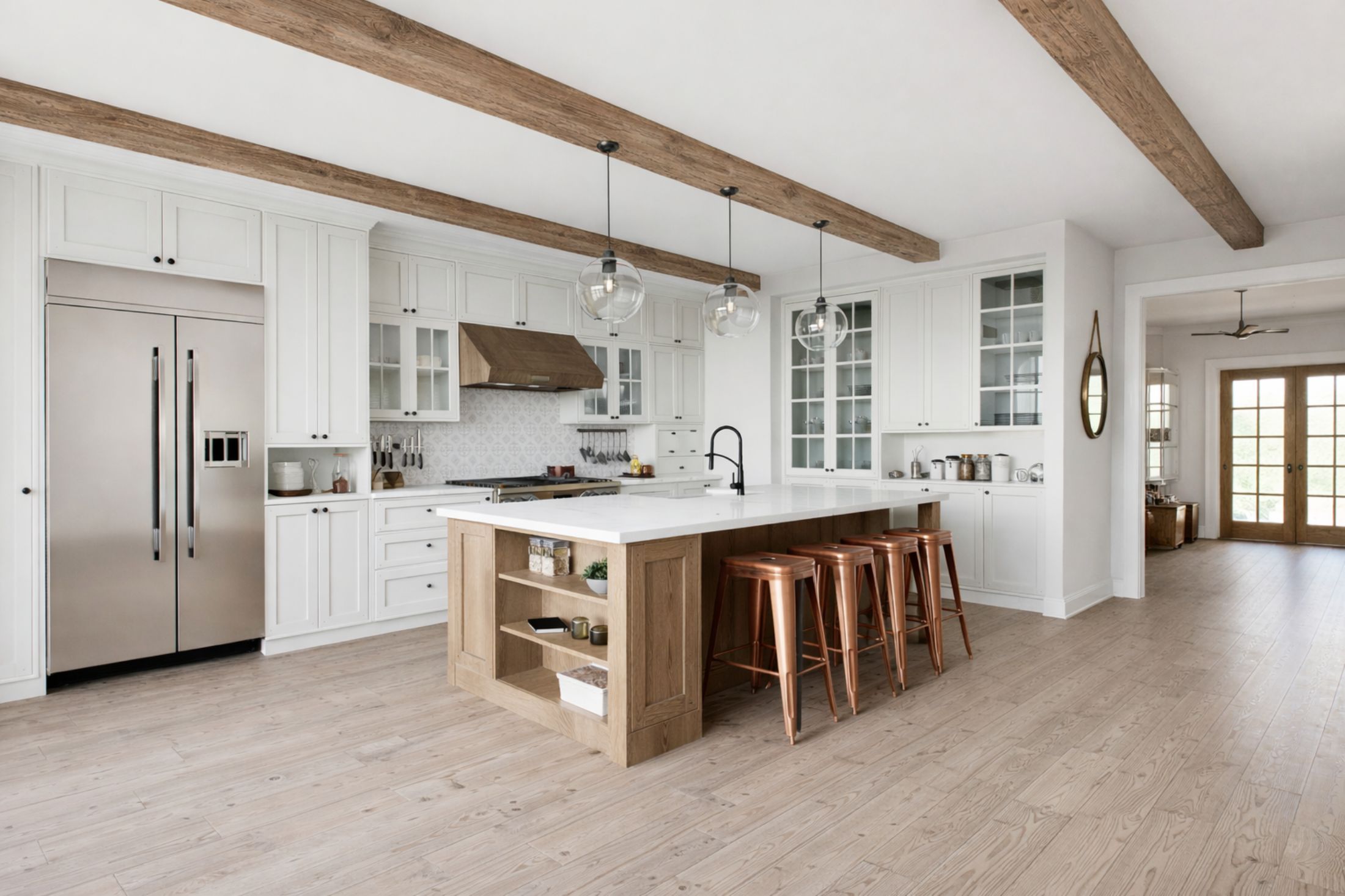
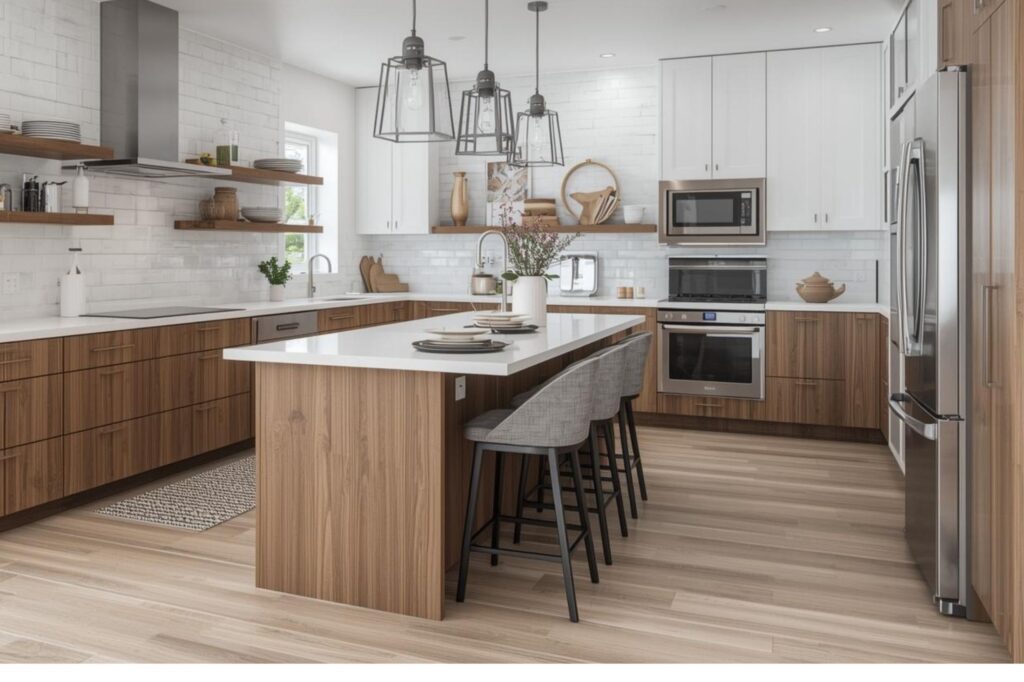
Most kitchen remodeling regrets come from decisions that were delayed or treated as minor during the planning phase. Homeowners often focus on finishes and visual preferences first, while structural layout, workflow, and construction sequencing receive less attention. Once demolition begins, those early omissions translate into layout compromises, added costs, or daily frustrations that remain long after the project is finished.
A kitchen remodel succeeds or struggles long before the first cabinet is installed. The planning phase determines how the space functions, how smoothly construction progresses, and whether the final result supports daily use rather than just appearance.
Layout Decisions Shape Daily Use More Than Finishes
One of the most common planning oversights is underestimating how strongly layout affects everyday comfort. Countertops, cabinet colors, and fixtures can be adjusted later. Sink placement, appliance spacing, and circulation paths cannot.
In many remodels, homeowners approve layouts based on static drawings without fully considering movement patterns. The distance between sink, cooktop, and refrigerator influences how efficiently meals are prepared. Door swing conflicts, appliance clearances, and island spacing affect whether the kitchen feels open or restrictive once in use. These issues rarely stand out on paper, yet they define how the kitchen performs over time.
Adjusting layout after rough-in work begins often triggers electrical, plumbing, and framing revisions. This becomes even more relevant in older homes, where structural framing and existing systems shape what can realistically be changed
Storage Planning Is Often Too Generic
Another early decision homeowners tend to regret involves storage. Cabinet counts alone do not determine usability. The internal organization, depth, and placement of storage zones matter far more than the total number of doors.
Kitchens that look generous on drawings often lack space for small appliances, food preparation tools, or waste sorting systems. This usually happens when storage planning follows standard templates instead of reflecting how the household actually cooks and shops. The result is cluttered countertops and underused cabinets, even in newly remodeled kitchens.
Addressing storage properly requires discussing habits early. How often groceries are purchased, which appliances stay accessible, and how many people use the kitchen at the same time all influence cabinet configuration. When these conversations happen after cabinets are ordered, options become limited.
Electrical and Lighting Decisions Carry Long-Term Impact
Lighting plans are frequently postponed until later stages, yet they are among the most difficult elements to correct afterward. Many homeowners regret relying on a single general lighting layer, assuming decorative fixtures will compensate.
Effective kitchen lighting combines task lighting, ambient lighting, and accent lighting. Each serves a distinct purpose. Poorly planned lighting creates shadows over work areas, uneven brightness, or glare during evening use. These issues affect safety and comfort, not just appearance.
Electrical outlet placement follows a similar pattern. Outlets positioned without considering appliance use lead to extension cords or awkward layouts. Once walls are closed, correcting these details becomes intrusive and costly.
Workflow and Appliance Integration Are Often Treated Separately
Appliance selection is usually handled early, but appliance integration is frequently postponed. This separation leads to mismatches between appliance dimensions and cabinetry, ventilation constraints, or clearance issues around doors and drawers.
For example, refrigerator depth influences aisle width. Dishwasher placement affects sink workflow. Vent hood sizing impacts cabinet layout above cooking zones. When these factors are addressed individually instead of as part of a unified plan, the kitchen loses efficiency even if each component appears correct on its own.
Professionally planned kitchens treat appliances as structural elements within the layout, not decorative add-ons.
Construction Sequencing Influences Cost and Timing
Many homeowners assume planning ends once design is approved. In reality, construction sequencing decisions made early influence cost stability and schedule reliability.
Material lead times, inspection requirements, and trade coordination all depend on accurate early planning. When selections remain open or layouts are not fully resolved, work pauses while adjustments are made. These interruptions extend timelines and increase coordination complexity.
Clear decisions upfront allow trades to work efficiently and reduce rework. This is rarely visible from the outside, yet it directly affects the remodeling experience.
Practical Planning Decisions That Deserve Early Attention
The following areas consistently surface in post-project reflections:
- Final appliance specifications before cabinetry approval
- Exact island dimensions with clearances measured in real space
- Storage zones based on daily use, not standard layouts
- Lighting layers planned alongside electrical rough-in
- Ventilation paths confirmed before framing adjustments
These elements do not add visual impact on their own, but they prevent compromises later.
Why Early Planning Feels Abstract but Matters Most
Planning discussions often feel theoretical compared to selecting visible finishes. That disconnect explains why many homeowners rush this phase. However, planning decisions lock in how the kitchen works long before finishes define how it looks.
Kitchens that remain comfortable and functional years after completion share one trait. The early planning phase addressed structure, workflow, and sequencing with the same attention given to materials and style.
A successful kitchen remodel is not defined by avoiding changes. It is defined by making the right decisions at the right time, when options are still open, and adjustments remain simple.
About the Author
At BLC Remodeling, kitchen specialists, plumbers, and electricians work side by side throughout each project. This article was written based on real remodeling experience, including situations where a two-inch difference in a floor plan changed how a family used their home for decades. Our approach focuses on planning that reflects the realities of construction, not just what looks good on paper.