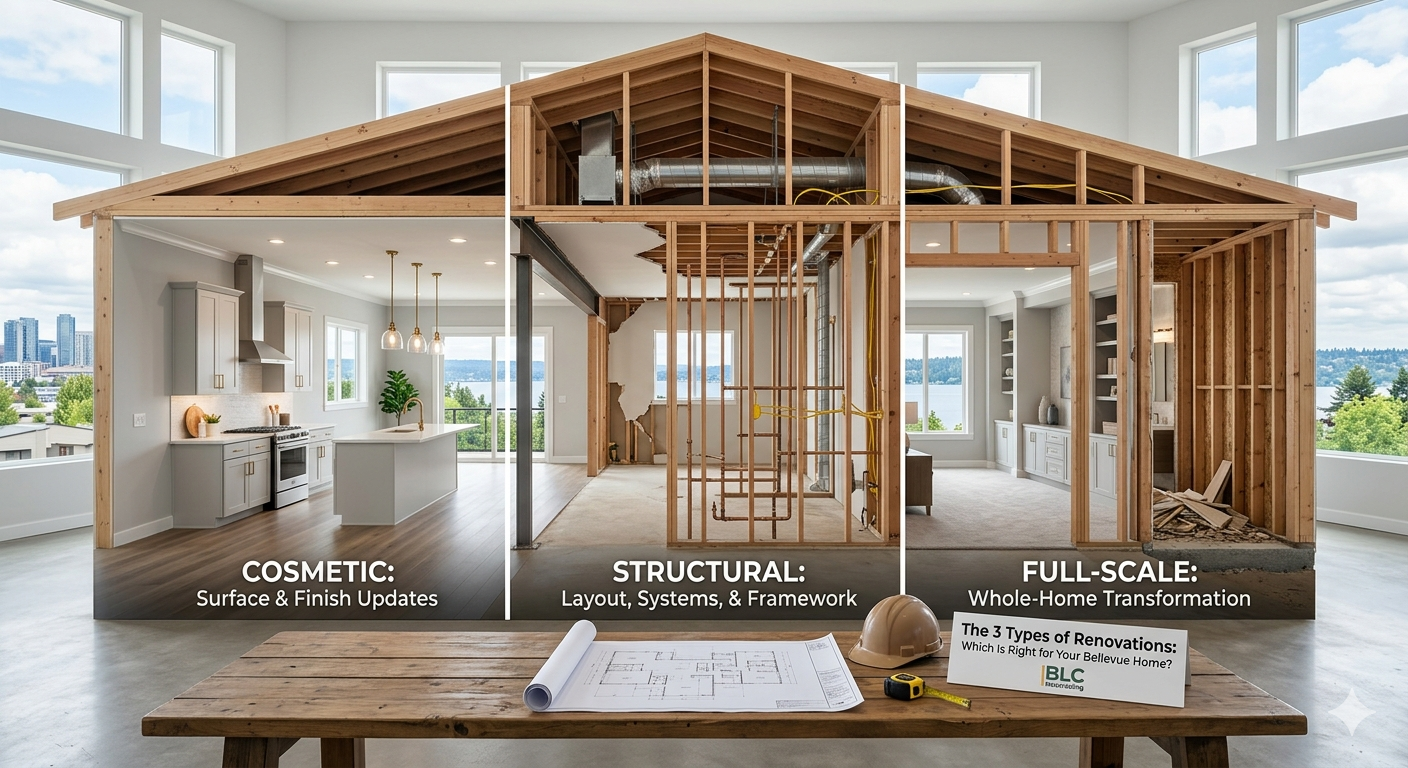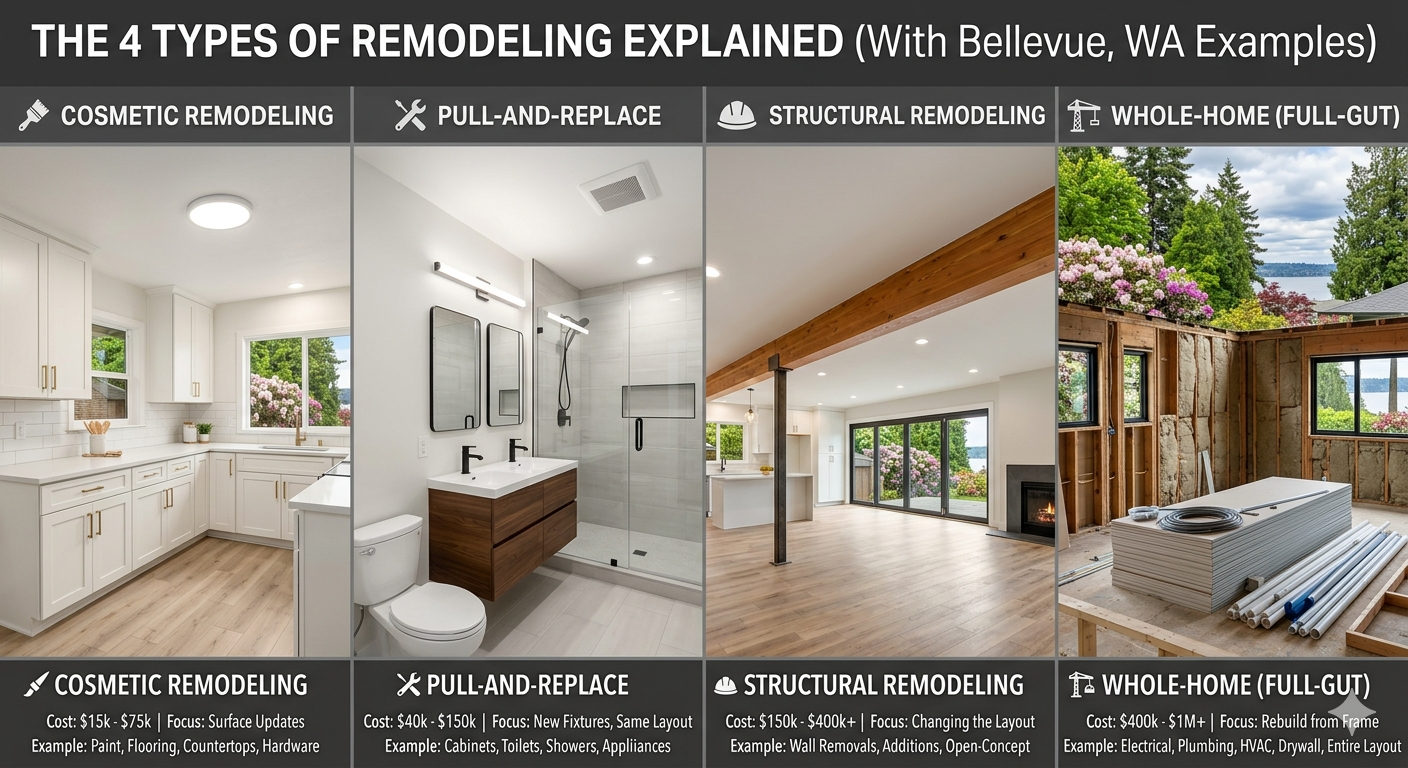
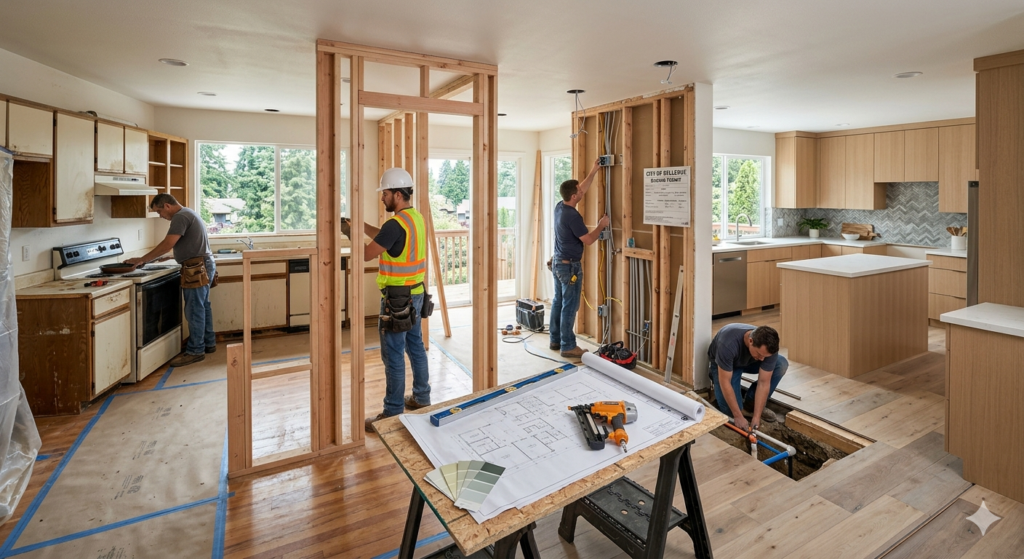
Remodeling is the process of changing the structure, layout, or function of an existing space in your home. It goes beyond cosmetic updates. A remodel can involve tearing down walls, reconfiguring floor plans, upgrading electrical and plumbing systems, and transforming how a room looks and works.
Whether you are a homeowner planning a kitchen overhaul, an investor evaluating a property flip, or a family that has outgrown its current layout, understanding what remodeling actually involves helps you set realistic expectations for cost, timeline, and scope.
This guide breaks down the full meaning of remodeling, walks through each phase of the process, explains what drives costs in Bellevue, WA, and gives you practical tools to plan a project that stays on budget and delivers lasting value.
What Does Remodeling Mean?
Remodeling means altering the structure, layout, or purpose of an existing space. When you remodel a kitchen, for example, you are not just replacing countertops or repainting cabinets. You might be moving the sink to a different wall, removing a partition to create an open floor plan, upgrading the electrical panel to support new appliances, or completely changing how the room functions.
The word “remodel” comes from reshaping something into a new form. In residential construction, that translates to structural changes, layout modifications, and functional upgrades that go deeper than surface-level improvements. A remodeled bathroom might have a new footprint. A remodeled basement might become a legal living space with egress windows, HVAC, and permits.
Remodeling can apply to a single room or an entire home. The scope ranges from moderate projects like converting a half bath into a full bathroom to large-scale whole-home remodels that gut a property down to the studs and rebuild it from the inside out.
Remodeling vs. Renovation: What’s the Difference?
These two terms are often used interchangeably, but they describe different scopes of work.
Renovation means restoring or updating a space without changing its structure or purpose. Refinishing hardwood floors, replacing old fixtures, repainting walls, and installing new tile in an existing bathroom layout are all renovations. The room keeps its original footprint and function.
Remodeling changes the structure, layout, or purpose of a space. Knocking out a wall between the kitchen and dining room, adding a bathroom where a closet used to be, or converting a garage into a living suite are remodeling projects. They require design work, structural engineering, permits, and often involve plumbing, electrical, and HVAC modifications.
The practical difference matters for budgeting. Renovations are typically less expensive because they work within existing structures. Remodels cost more because they involve demolition, new framing, rerouted systems, and code compliance. In Bellevue, where building codes are strict and permit requirements are thorough, understanding this distinction helps you scope your project accurately from the start.
Common Types of Home Remodeling Projects
Not every remodel is the same size or complexity. Here are the most common categories homeowners and investors encounter.
Kitchen remodeling is the most popular and often the most expensive room to remodel. Projects range from reconfiguring the work triangle and adding an island to full gut remodels with custom cabinetry, new plumbing lines, and upgraded electrical.
Bathroom remodeling includes converting layouts, expanding square footage, relocating fixtures, and upgrading to modern accessibility standards. Master bath remodels in Bellevue frequently involve heated floors, walk-in showers, and dual vanities.
Whole-home remodeling involves multiple rooms or the entire house. This is common with older Bellevue homes built in the 1960s through 1980s that need updated systems, open floor plans, and modern finishes to match current living standards and property values.
Basement remodeling converts unfinished or underused below-grade space into functional living areas such as home offices, guest suites, media rooms, or rental units. These projects require moisture management, egress compliance, and mechanical system integration.
Addition remodeling expands the home’s footprint by adding new rooms, second stories, or bump-outs. This is technically new construction combined with remodeling of the existing structure where the addition connects.
Why Homeowners in Bellevue Remodel
Bellevue’s housing market creates specific conditions that drive remodeling decisions. Median home prices in the area remain among the highest in Washington state, which means homeowners often find it more cost-effective to remodel their current home than to sell and buy something new. The math frequently favors investing in the property you already own.
Increasing Property Value and Equity
Strategic remodeling directly increases a home’s market value. Kitchen and bathroom remodels consistently deliver the strongest returns. According to the National Association of Realtors’ 2024 Remodeling Impact Report, a complete kitchen renovation recovers roughly 75% of its cost at resale, while bathroom remodels recover approximately 71%.
In Bellevue specifically, where buyers expect modern finishes and open layouts, a well-executed remodel can push a home’s value well above neighborhood comparables. Investors use this strategy to acquire older properties, remodel them to current standards, and capture significant equity gains.
Improving Functionality and Livability
Many Bellevue homes were built decades ago with floor plans that do not match how families live today. Closed-off kitchens, small bathrooms, limited storage, and disconnected living spaces are common in homes from the 1970s and 1980s.
Remodeling solves functional problems. It creates open-concept kitchens for families who cook and entertain together. It adds a second bathroom so mornings are not a bottleneck. It converts unused formal dining rooms into home offices. The goal is making your home work better for how you actually use it every day.
Addressing Aging Systems and Code Compliance
Older homes often have outdated electrical panels, galvanized steel plumbing, insufficient insulation, and HVAC systems that no longer meet efficiency standards. These are not just comfort issues. They are safety and code compliance concerns.
Remodeling gives you the opportunity to bring these systems up to current Washington State building codes. When walls are open during a remodel, it is the most cost-effective time to replace old wiring, upgrade plumbing to copper or PEX, add insulation, and install energy-efficient mechanical systems. Addressing these issues during a remodel prevents expensive standalone repairs later.
The Home Remodeling Process Step by Step
Understanding the remodeling process removes uncertainty and helps you make better decisions at every stage. Here is how a typical home remodel progresses from initial idea to completed project.
Step 1 – Define Your Goals and Budget
Every successful remodel starts with clarity about what you want to achieve and how much you can invest. Before contacting contractors or browsing design inspiration, answer these questions honestly.
What problems are you solving? Are you adding space, improving flow, updating outdated finishes, or increasing resale value? Your goals determine the scope, and scope determines cost.
Set a realistic budget range based on research, not wishful thinking. Talk to your lender about financing options if needed. A good rule is to establish your maximum budget, then plan your project to come in at 80-85% of that number. The remaining 15-20% becomes your contingency for surprises that almost always surface during construction.
Step 2 – Hire a Remodeling Contractor
Choosing the right contractor is the single most important decision in your remodel. In Bellevue, look for a licensed, bonded, and insured general contractor with a verifiable track record of completed projects similar to yours.
Get at least three detailed bids. Compare them not just on price but on scope, materials specified, timeline, payment schedule, and warranty terms. The lowest bid is rarely the best value. It often signals cut corners, subcontractor quality issues, or a scope that does not match what you actually need.
Check references. Visit completed projects if possible. Verify the contractor’s license through the Washington State Department of Labor & Industries. A trustworthy contractor will welcome this scrutiny.
Step 3 – Design and Planning Phase
Once you have selected your contractor, the design phase begins. This is where your goals become architectural plans, material selections, and a detailed scope of work.
Depending on the project’s complexity, you may work with an architect, an interior designer, or your contractor’s in-house design team. This phase produces construction drawings, material specifications, fixture selections, and a finalized budget.
Do not rush this step. Changes made on paper cost nothing. Changes made during construction cost thousands. Invest the time to get every detail right before a single hammer swings.
Step 4 – Permits and Approvals
Most remodeling projects in Bellevue require building permits from the City of Bellevue Development Services Department. Permits are required for structural changes, electrical work, plumbing modifications, mechanical system upgrades, and changes to the building envelope.
Your contractor typically handles the permit application process, but you should understand what is being submitted and why. Permit fees in Bellevue vary based on project valuation. Plan for permit costs to add 1-3% of total project cost to your budget.
Permit timelines vary. Simple permits may be approved in a few weeks. Complex projects requiring structural review or design review board approval can take several months. Your contractor should build permit lead times into the project schedule.
Step 5 – Demolition and Construction
This is where the physical transformation begins. Demolition removes existing structures, finishes, and systems that are being replaced. Construction builds the new layout according to approved plans.
The construction phase follows a logical sequence. Framing comes first, establishing new walls, openings, and structural elements. Then rough-in work for plumbing, electrical, and HVAC happens while walls are open. Insulation and drywall follow. Finally, finish work includes cabinetry, flooring, tile, paint, fixtures, and trim.
Expect noise, dust, and disruption. Your contractor should establish clear working hours, dust containment measures, and daily cleanup protocols. Good communication during this phase prevents misunderstandings and keeps the project moving.
Step 6 – Inspections and Finishing Work
Building inspectors from the City of Bellevue will visit the project at required milestones. Common inspection points include framing, rough plumbing, rough electrical, insulation, and final inspection.
These inspections verify that work meets code requirements. If an inspection reveals an issue, your contractor corrects it before proceeding. This is a protection for you as the homeowner. Never pressure your contractor to skip or rush inspections.
Finishing work happens after inspections pass. This includes installing countertops, setting tile, hanging doors, installing hardware, painting, and connecting fixtures. The finishing phase is where your remodel starts looking like the space you envisioned.
Step 7 – Final Walkthrough and Project Closeout
Before making your final payment, conduct a thorough walkthrough with your contractor. Bring your original scope of work and check every item. Note anything incomplete, damaged, or not matching specifications on a punch list.
Your contractor addresses all punch list items before the project is officially complete. You should receive copies of all permits, inspection approvals, warranties, and maintenance instructions for new systems and materials.
A reputable contractor stands behind their work after closeout. Ask about warranty terms for both labor and materials before you sign your contract, not after the project is done.
How Much Does a Home Remodel Cost?
Cost is the question every homeowner asks first. The honest answer is that remodeling costs vary enormously based on scope, materials, labor market conditions, and the specific challenges of your home. But you can establish realistic ranges to guide your planning.
Average Remodeling Costs by Project Type
These ranges reflect typical costs in the Bellevue, WA market, where labor rates and material costs tend to run higher than national averages due to the region’s strong construction demand and cost of living.
| Project Type | Budget Range | Mid-Range | High-End |
| Kitchen Remodel | $30,000 – $50,000 | $50,000 – $90,000 | $90,000 – $175,000+ |
| Bathroom Remodel | $15,000 – $25,000 | $25,000 – $50,000 | $50,000 – $100,000+ |
| Whole-Home Remodel | $100,000 – $200,000 | $200,000 – $400,000 | $400,000 – $800,000+ |
| Basement Finish | $40,000 – $60,000 | $60,000 – $100,000 | $100,000 – $175,000+ |
| Room Addition | $50,000 – $100,000 | $100,000 – $200,000 | $200,000 – $400,000+ |
These numbers include design, permits, labor, materials, and contractor overhead and profit. They do not include furniture, décor, or landscaping.
Key Factors That Affect Remodeling Costs
Project scope and complexity is the biggest cost driver. Moving walls, relocating plumbing, and upgrading electrical panels cost significantly more than working within existing layouts.
Material selections create enormous cost variation. Stock cabinets versus custom cabinetry. Laminate countertops versus quartzite. Builder-grade fixtures versus designer hardware. Your material choices can swing a kitchen remodel budget by $20,000 or more.
Labor costs in Bellevue reflect the region’s competitive construction market. Skilled tradespeople, including electricians, plumbers, tile setters, and finish carpenters, command premium rates. Labor typically represents 35-45% of total project cost for a remodel.
Structural surprises appear when walls open up. Rot, outdated wiring, asbestos, inadequate framing, and plumbing issues hiding behind drywall can add unplanned costs. Older homes carry higher risk for these discoveries.
Permit and engineering fees add to the budget. Complex projects requiring structural engineering, energy code compliance calculations, or design review board approval generate additional professional fees.
Site access and logistics affect cost in Bellevue, where many homes sit on sloped lots, have limited driveway access, or are in neighborhoods with HOA restrictions on construction hours and staging.
Hidden Costs Most Homeowners Overlook
Temporary housing or meals. If your kitchen is gutted for eight weeks, you will spend money eating out or setting up a temporary kitchen. If the remodel affects bedrooms or bathrooms, you may need to stay elsewhere.
Storage costs. Furniture and belongings need to go somewhere during construction. Portable storage containers or off-site storage units add monthly costs.
Landscaping repair. Construction traffic, material staging, and dumpster placement can damage lawns, driveways, and landscaping. Budget for restoration after the project.
Upgraded code requirements. When you remodel, current building codes apply to the new work. This can trigger upgrades to smoke detectors, electrical panels, insulation, and egress windows that were not in your original scope.
Design changes during construction. Changing your mind after work has started is expensive. Restocking fees, wasted labor, schedule delays, and change order markups add up quickly. Make decisions during the design phase, not the construction phase.
What to Expect During a Remodel
Knowing what to expect reduces stress and helps you make better decisions throughout the project. Remodeling is disruptive by nature, but preparation and communication make it manageable.
Realistic Timelines for Common Projects
| Project Type | Typical Duration |
| Bathroom Remodel | 4 – 8 weeks |
| Kitchen Remodel | 8 – 14 weeks |
| Basement Finish | 8 – 12 weeks |
| Whole-Home Remodel | 4 – 9 months |
| Room Addition | 3 – 6 months |
These timelines cover construction only. Add 4-12 weeks for design, permitting, and material lead times before construction starts. Custom cabinetry, specialty tile, and imported fixtures can have lead times of 8-16 weeks. Your contractor should identify long-lead items early and order them during the design phase to prevent construction delays.
Living Through a Remodel: Practical Tips
Set up a temporary kitchen if your kitchen is being remodeled. A folding table, microwave, mini fridge, and electric kettle in another room will save you hundreds of dollars in restaurant meals over a multi-week project.
Seal off construction zones. Dust migrates everywhere. Plastic sheeting and zipper doors between the work area and your living space make a significant difference. Your contractor should install dust barriers, but adding your own layer of protection helps.
Establish a daily routine. Know when workers arrive and leave. Know which areas are off-limits. Keep pets and children away from construction zones. Predictability reduces the feeling of chaos.
Protect your belongings. Move furniture, artwork, and valuables away from the construction area. Cover items that cannot be moved. Construction dust is fine enough to penetrate closed cabinets and drawers.
Be patient with the messy middle. Every remodel goes through a phase where it looks worse than when you started. Demolition is done, framing is rough, and the finished product feels far away. This is normal. Trust the process and your contractor’s schedule.
How to Communicate Effectively With Your Contractor
Designate one decision-maker. If two homeowners are involved, agree on who communicates with the contractor. Conflicting instructions from multiple people cause confusion, delays, and errors.
Use a single communication channel. Whether it is email, a project management app, or a daily on-site check-in, keep all project communication in one place. Text messages get lost. Verbal agreements get forgotten. Written records protect everyone.
Ask questions early. If something does not look right or you do not understand a decision, speak up immediately. Small issues caught early are easy to fix. The same issues discovered weeks later can require expensive rework.
Respond to decisions quickly. Your contractor will need timely answers on material selections, design details, and change approvals. Delayed decisions delay construction. Keep the project moving by being available and decisive.
How to Plan a Remodel That Stays on Budget
Budget overruns are the most common complaint in remodeling. They are also the most preventable. The homeowners who stay on budget share common habits: they plan thoroughly, make decisions early, and build financial cushions into their numbers.
Setting Priorities and Phasing Your Project
Not everything needs to happen at once. If your budget does not cover a full wish list, prioritize the work that delivers the most value or solves the most urgent problem.
Structural and systems work comes first. Fixing a failing roof, replacing knob-and-tube wiring, or addressing a cracked foundation should take priority over cosmetic upgrades. These issues affect safety, insurability, and long-term property value.
High-impact rooms come next. Kitchens and bathrooms deliver the strongest combination of daily livability improvement and resale value. If you can only remodel one area, these rooms give you the most return.
Cosmetic updates can wait. Painting, new flooring in low-traffic areas, and updated light fixtures are relatively inexpensive and can be done later without the complexity of a full remodel.
Phasing your project across multiple years is a legitimate strategy. Complete the kitchen this year. Tackle the master bathroom next year. This approach keeps each phase affordable and lets you learn from each project before starting the next one.
Getting Accurate Quotes and Comparing Bids
Provide the same scope to every contractor. If each contractor is bidding on a different version of your project, you cannot compare prices meaningfully. Create a written scope of work or have your designer produce drawings that all bidders use.
Ask for itemized bids. A single lump-sum number tells you nothing. Itemized bids break costs into categories: demolition, framing, electrical, plumbing, materials, fixtures, labor, permits, and overhead. This lets you see where money is going and where you might adjust.
Verify what is included and excluded. Does the bid include permit fees? Dumpster rental? Final cleaning? Appliance installation? Paint touch-ups? The items not listed in a bid are the items that become surprise charges later.
Understand payment schedules. Reputable contractors use milestone-based payment schedules tied to completed work. Never pay more than 10-15% upfront. Never pay the final 10-15% until all punch list items are resolved and final inspections pass.
Building a Contingency Fund
Every remodeling budget needs a contingency fund for unexpected costs. This is not optional. It is essential.
For cosmetic renovations, set aside 5-10% of your total budget as contingency.
For remodels involving structural changes, set aside 15-20%. The more walls you open, the more likely you are to find surprises.
For older homes (built before 1980), consider a 20-25% contingency. Older homes have higher rates of hidden issues including asbestos, lead paint, outdated wiring, and structural deficiencies that only become visible during demolition.
If you do not use your contingency, you have money left over. That is a good problem. If you need it and do not have it, you face the stress of either cutting scope mid-project or scrambling for additional financing. Build the cushion in from the start.
Choosing the Right Remodeling Contractor in Bellevue
Your contractor determines the quality of your remodel, the accuracy of your budget, and the smoothness of your experience. Choosing the right one is worth significant effort.
What to Look for in a Licensed Contractor
Active Washington State contractor’s license. Verify through the Washington State Department of Labor & Industries that the contractor holds a current, active license with no unresolved complaints.
General liability insurance and workers’ compensation coverage. Ask for certificates of insurance. If an uninsured worker is injured on your property, you could be liable.
Established local presence. A contractor with years of completed projects in Bellevue understands local building codes, permit processes, subcontractor networks, and the specific challenges of building in this market.
Portfolio of similar projects. If you are remodeling a kitchen, look for a contractor who has completed kitchens of similar scope and quality. Ask for references from those specific projects.
Clear, detailed contracts. A professional contractor provides a written contract that specifies scope, materials, timeline, payment schedule, change order process, warranty terms, and dispute resolution. If any of these elements are missing, ask why.
Questions to Ask Before Signing a Contract
- Who will be the on-site project manager, and how often will they be present?
- What is your process for handling change orders, and what markup do you apply?
- How do you handle unexpected discoveries like rot, mold, or outdated wiring?
- What is your typical timeline for a project of this scope, and what causes delays?
- Can you provide a detailed, itemized estimate rather than a lump-sum bid?
- What warranty do you offer on labor, and what manufacturer warranties apply to materials?
- How do you manage dust, noise, and site cleanliness during construction?
- What is your payment schedule, and is it tied to completed milestones?
- Will you pull all required permits and schedule all inspections?
- Can I speak with three recent clients who had similar projects completed?
The answers to these questions reveal more about a contractor’s professionalism and reliability than any marketing material ever will.
Conclusion
Remodeling transforms the structure, layout, and function of your home. Understanding what it means, how the process works from goal-setting through final walkthrough, and what drives costs gives you the foundation to plan a project that delivers real, lasting value.
Every successful remodel starts with clear goals, a realistic budget, and the right contractor. In Bellevue’s competitive housing market, a well-planned remodel is one of the smartest investments you can make in your property and your quality of life.
We help Bellevue homeowners plan and execute remodeling projects with transparent pricing, expert craftsmanship, and clear communication at every step. Contact BLC Remodeling today to discuss your project goals and get a detailed, no-obligation estimate built around your budget and vision.
Frequently Asked Questions
What is the difference between remodeling and renovation?
Renovation updates or restores a space without changing its structure or layout. Remodeling changes the structure, layout, or function of a space. A renovation might replace old countertops. A remodel might move the entire kitchen to a different part of the house.
How long does a typical home remodel take?
Timelines depend on scope. A bathroom remodel typically takes 4-8 weeks of construction. A kitchen remodel runs 8-14 weeks. Whole-home remodels can take 4-9 months. Add 4-12 weeks before construction for design, permitting, and material ordering.
How much should I budget for a kitchen remodel in Bellevue?
In the Bellevue market, kitchen remodels range from $30,000 for budget-conscious updates to $175,000 or more for high-end, full-gut projects. A mid-range kitchen remodel with quality materials and layout changes typically falls between $50,000 and $90,000.
Do I need permits for a remodel in Bellevue, WA?
Yes. Most remodeling projects in Bellevue require building permits, especially those involving structural changes, electrical work, plumbing modifications, or mechanical system upgrades. Your contractor should handle the permit application process and schedule all required inspections.
What hidden costs should I expect during a remodel?
Common hidden costs include temporary housing or dining expenses, storage for furniture and belongings, landscaping repair after construction, code-required upgrades discovered during demolition, and change orders from design decisions made after construction begins. A contingency fund of 15-20% helps cover these surprises.
How do I choose the right remodeling contractor?
Look for an active Washington State contractor’s license, general liability and workers’ compensation insurance, a portfolio of completed projects similar to yours, detailed written contracts, and strong references from recent clients. Get at least three itemized bids and compare scope, not just price.
Can I live in my home during a remodel?
In most cases, yes. Single-room remodels like kitchens or bathrooms allow you to stay in the home with some inconvenience. Whole-home remodels may require temporary relocation depending on the scope of demolition and construction. Discuss livability logistics with your contractor during the planning phase.