

Can you redo a bathroom for $5,000 in Bellevue? Only a defined current scope and real proposals can answer. At that constraint, planning should begin with a tightly bounded cosmetic refresh or maintenance package in a bathroom whose core assemblies and systems are already sound. It should not assume a full remodel, relocated plumbing, new wet-area construction, or concealed repair.
The boundary matters more than the shopping list. Repainting, replacing selected accessories, improving organization, or changing a compatible surface-mounted item can be evaluated without promising that every bathroom component will change. If inspection reveals leakage, damaged substrate, unsafe systems, or failed waterproofing, the project must be redefined around the condition rather than forced into the original number.
Set the no-demolition premise
Describe the proposed refresh with explicit work limits: no wall or floor removal, no shower or tub assembly opening, no fixture relocation, no structural change, and no assumed plumbing or electrical alteration unless separately evaluated. List every retained surface and confirm that it is cleanable, stable, dry, and suitable to remain.
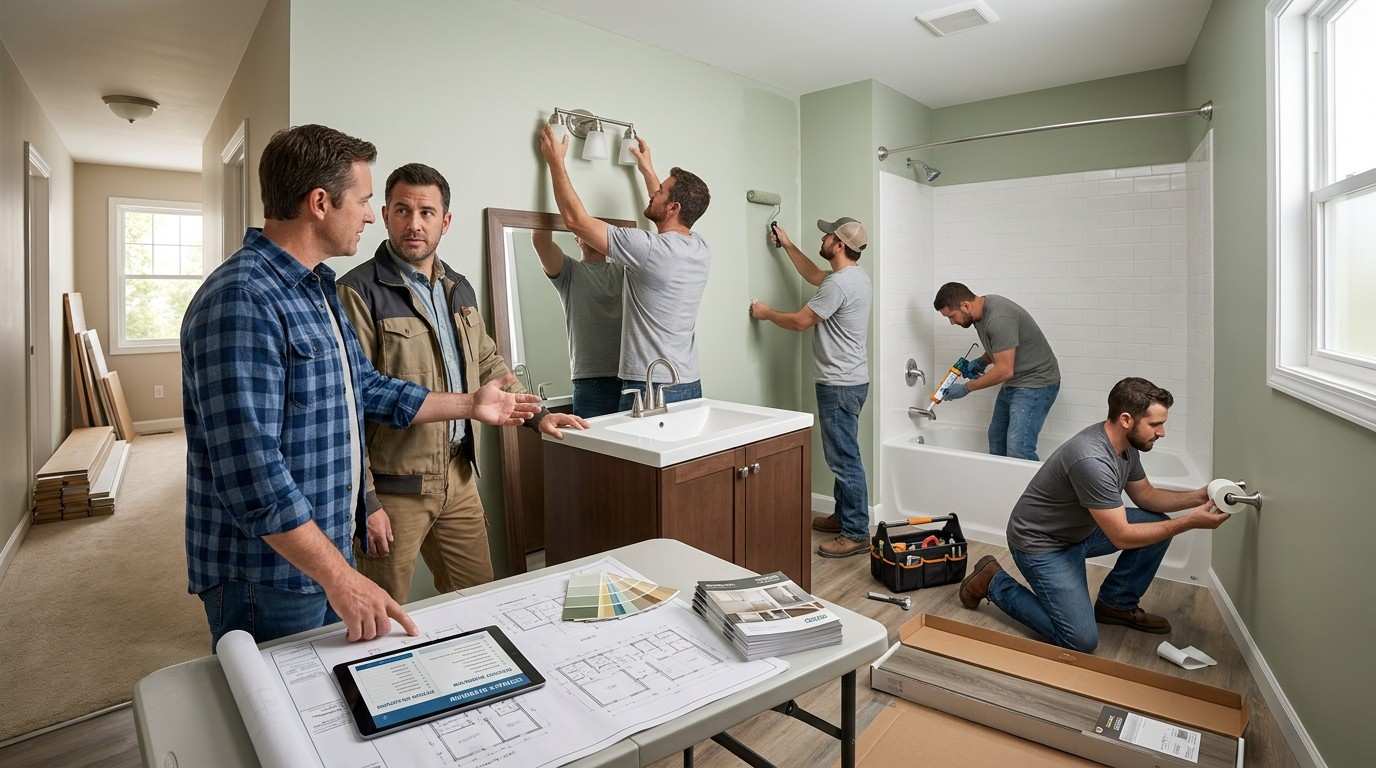
A Bellevue bathroom remodeling contractor can help distinguish a finish task from work that reaches concealed assemblies. Once demolition, trade permits, custom fabrication, or water-sensitive reconstruction enters the scope, the original cosmetic premise may no longer apply. Stop and reprice rather than quietly expanding the boundary.
Inspect before selecting cosmetic items
Operate the toilet, faucets, drains, fan, lights, outlets, windows, door, and shutoffs. Look for movement, corrosion, persistent odor, staining, soft flooring, cracked grout, loose tile, failed sealant, damaged cabinetry, and condensation. Record what is observed without guessing at the hidden cause.
If a condition suggests active water, electrical, ventilation, or substrate failure, obtain qualified evaluation. Covering a stain, recaulking a moving joint, or placing new flooring over damage does not establish that the assembly is sound. Necessary repairs belong ahead of the appearance budget.
Choose improvements that remain truly surface-level
Possible candidates include wall paint, a mirror, towel hardware, accessible storage, textiles, a shower curtain, compatible cabinet hardware, or selected surface-mounted lighting and accessories. Each still needs measurement, substrate review, attachment, protection, and installation. A simple product can become a larger task when holes, wiring, backing, or surrounding finishes do not align.
Use the cosmetic home improvement guide to prioritize repair, editing, light, and consistency before adding decorative objects. In a small bathroom, fewer coordinated changes often read more clearly than replacing unrelated pieces one by one.
Keep wet-area assemblies out of a cosmetic promise
Tile, shower pans, tub surrounds, waterproofing, drains, valves, and penetrations work as connected systems. Replacing a few visible pieces may disturb the layer responsible for water control. If a wet area is failing or needs redesign, define that as a separate assembly project with appropriate investigation, documentation, and testing.
The $10,000 bathroom scope-ladder article explains how a larger but still constrained plan should rank water protection and function before finishes. The distinction is intentional: neither budget figure guarantees a package, and a five-thousand-dollar refresh should not borrow the promises of a deeper remodel.
Check whether a permit or licensed trade is involved
The City of Bellevue’s permit information notes that projects, including some remodels without structural work, can require review and inspections. Requirements depend on the actual work. Confirm the current path for the property instead of treating a low budget or cosmetic label as an exemption.
Electrical, plumbing, mechanical, and construction activities may have separate rules and qualified-trade requirements. Identify who will determine applicability, obtain approvals, arrange inspections, and preserve records. If a desired replacement changes wiring, ventilation, piping, or the building assembly, revise the scope before authorizing it.
Create an all-in refresh worksheet
List materials, tax, delivery, disposal, protection, preparation, labor, patching, touchup, cleanup, and any owner-supplied products. Add model numbers, quantities, dimensions, finish, lead time, and installation responsibility. Do not compare a do-it-yourself material list with a professionally managed proposal as though they include the same work and risk.
Decide what will be omitted if verified proposals exceed the constraint. Preserve repairs and safe operation first, then the highest-impact coordinated finish tasks. Avoid beginning several incomplete changes. One painted room with repaired hardware and resolved storage can be more successful than a collection of uninstalled products.
Approve a refresh only after the boundary holds
Walk the final worksheet in the room. Confirm that retained fixtures operate, mounting locations are suitable, selected products fit, and no step depends on opening a protected surface. Write exclusions in plain language and state how unexpected conditions will pause work. The scope should remain understandable to the owner and every person performing it.
Share photos, condition notes, the itemized worksheet, and the budget constraint through a Bellevue bathroom estimate request. Ask whether the proposed boundary is feasible and which observations require investigation before a cosmetic project proceeds.
If the room passes that test, complete the refresh carefully and keep product records. If it does not, resist the urge to hide necessary work inside a small number. A successful $5,000 plan is not a miniature full remodel; it is an honest, limited improvement to a bathroom already capable of supporting it. Review the completed room for operation, clean edges, stable attachments, and signs of moisture. Any unexpected condition should return to diagnosis instead of being covered by another cosmetic layer.