

Kitchen Triangle Replacement Modern Design can shape scope, cost, permits, materials, and timing. This guide helps homeowners compare practical remodeling decisions before the next step.
For outside planning context, Seattle City Light rebates can help compare local energy incentives before final remodeling decisions are made.
The kitchen work triangle is being replaced by the zone-based kitchen layout, a design system that organizes the kitchen into dedicated activity areas rather than three fixed points. This shift reflects how modern households actually cook, store, clean, and entertain. For Bellevue homeowners planning a remodel, understanding zones is the difference between a kitchen that looks current and one that genuinely supports daily life, multiple cooks, and open-concept living for years to come.
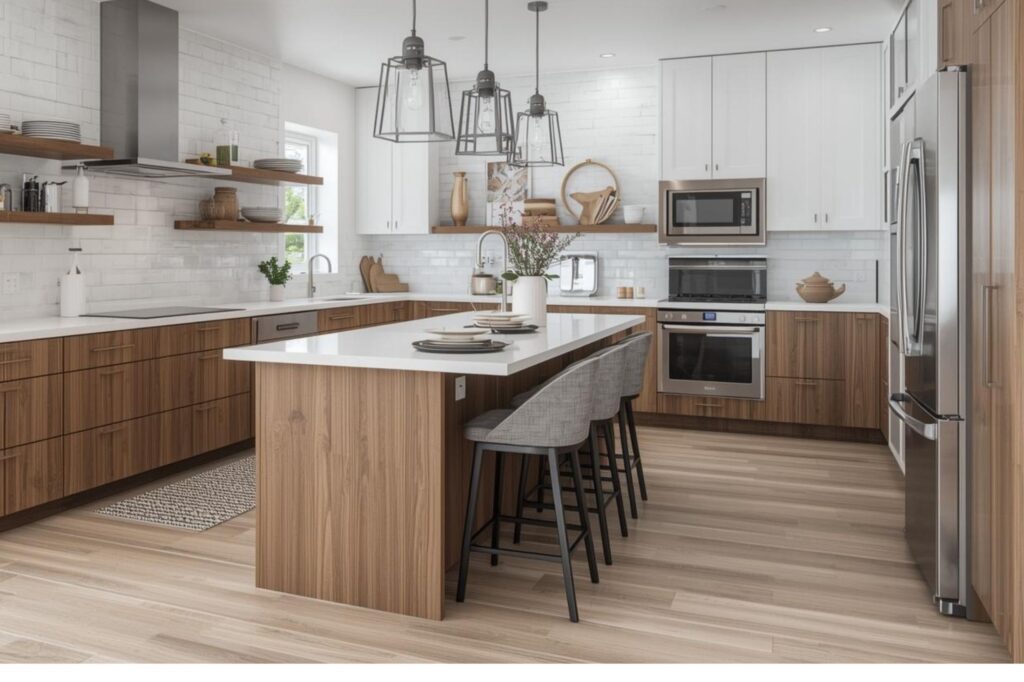
The Kitchen Work Zone Concept Replacing the Triangle
The zone-based layout divides the kitchen into five functional areas: storage, preparation, cooking, cleaning, and serving. Each zone groups the tools, appliances, and counter space required for that activity. Unlike the rigid sink-stove-fridge triangle, zones flex around how a household actually uses the space, supporting multiple cooks, larger islands, and open floor plans common in modern Bellevue homes.
How Work Zones Differ from the Classic Triangle
The triangle, developed in the 1940s, assumed one cook, one sink, one stove, and one fridge in a closed kitchen. Modern kitchens rarely match that pattern. Households now have double ovens, prep sinks, beverage stations, and microwave drawers. Zones accommodate this complexity by clustering related tasks. A prep zone keeps knives, cutting boards, and trash pullouts together. A cleaning zone consolidates the sink, dishwasher, and recycling. The result is fewer steps and less crossing paths.
The Five Core Zones in a Modern Kitchen
A complete zone-based design includes a consumables zone (refrigeration and pantry), a non-consumables zone (dishes, glassware, utensils), a cleaning zone (sink, dishwasher, waste), a preparation zone (counter space, knives, small appliances), and a cooking zone (range, ovens, ventilation). Each zone is positioned based on workflow, not symmetry. Storage lives where it is used, not where cabinets fit most easily.
Understanding the zones is the foundation. Planning a functional kitchen layout depends on your household size, cooking habits, and how the kitchen connects to the rest of the home.
Why Bellevue Homeowners Are Adopting Zone-Based Layouts
Bellevue kitchens increasingly open to dining and living areas, which makes the triangle impractical. When the fridge sits on a peninsula facing the family room and the range anchors a back wall, the triangle stretches into inefficiency. Zones solve this by treating the island as its own prep and serving hub, freeing perimeter walls for storage and cooking.
Open-Concept Living and Multi-Cook Households
Most Bellevue remodels involve open-concept renovations where two or more people cook simultaneously. Zones let one person prep at the island while another manages the range, with no traffic conflict. This matters most in homes with children, frequent entertaining, or aging-in-place planning, where clear pathways and dedicated counter areas reduce daily friction.
Cost and Planning Considerations for a Zone-Based Remodel
Zone-based kitchens often cost more than triangle layouts because they require additional plumbing for prep sinks, more cabinetry for dedicated storage, and careful electrical planning for appliance clusters. In Bellevue, a typical kitchen remodel budget ranges from $45,000 to $125,000 depending on scope, finishes, and structural changes. Reconfiguring zones may require moving gas lines, relocating vents, or expanding the footprint. Planning these decisions before demolition prevents costly mid-project changes and protects your long-term return on investment.
Conclusion
The zone-based layout has replaced the kitchen triangle because it matches how modern households actually cook, store, and gather. It supports multiple cooks, open floor plans, and today’s appliance variety.
For Bellevue homeowners, adopting zones during a remodel improves daily function and protects resale value as buyer expectations continue shifting toward flexible, workflow-driven kitchens.
We design every kitchen at BLC Remodeling around your zones, your budget, and your long-term value. Request your consultation today.
Questions homeowners ask about what is replacing the kitchen triangle in modern design?
Use these answers to compare scope, schedule, selections, and the details that usually shape a smoother remodeling conversation.
Is the kitchen triangle still relevant today?
The triangle remains useful for small, single-cook kitchens but falls short in larger, open-concept homes where zone-based layouts handle modern workflows more effectively.
What are the five kitchen zones?
The five zones are consumables (food storage), non-consumables (dishware), cleaning, preparation, and cooking. Each clusters related tools and appliances together for efficient workflow.
Does a zone-based kitchen cost more to build?
Often yes, due to added plumbing, electrical, and cabinetry needs. The added cost typically pays back through better function and stronger resale appeal in Bellevue markets.
Can zones work in a small kitchen?
Yes. Smaller kitchens can use compact zones by combining prep and cleaning areas or using vertical storage to maintain clear functional separation without sacrificing space.